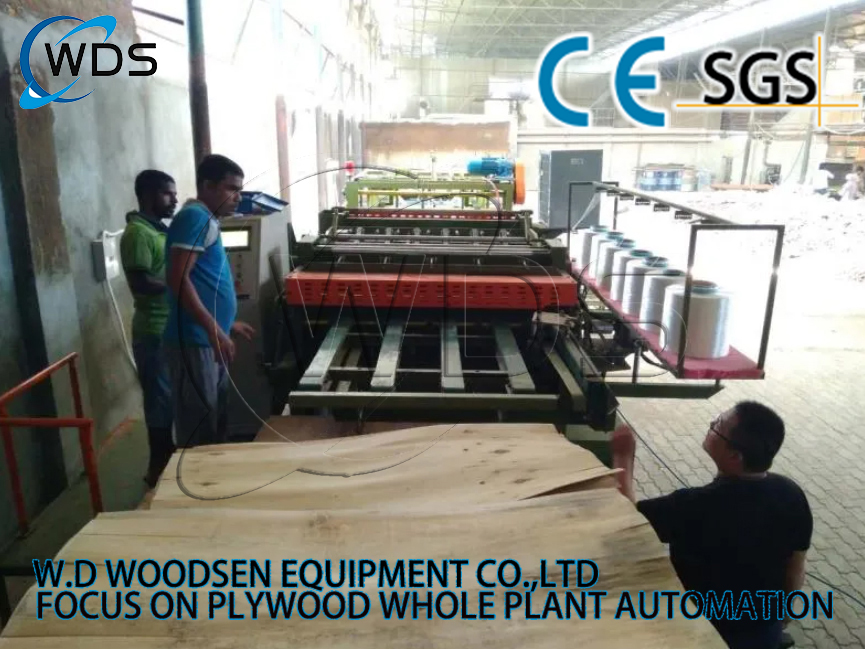
1. What are the main functions of the Woodworking Horizontal Core Veneer Composer Machine?
The Woodworking Horizontal Core Veneer Composer Machine is mainly used for horizontal splicing, automatic winding and automatic laying of veneers with a thickness of 1.0-3.6mm. It is essential in the production of a variety of wood products, including laminates, LVL (laminated veneer lumber), flooring substrates, furniture boards, plywood, container boards, melamine boards and blockboards.
2. How does this Woodworking Horizontal Core Veneer Composer Machine improve the production process compared to traditional methods?
Woodworking Horizontal Core Veneer Composer Machine revolutionizes the traditional manual decking process by automating plywood decking. It increases efficiency by allowing continuous production and reducing labor costs, ultimately enabling a more economical manufacturing process.
3. What types of veneers can this machine woodworking?
The Woodworking Horizontal Core Veneer Composer Machine can process veneers with thicknesses from 1.0mm to 3.6mm. This versatility makes it suitable for a wide range of applications in the woodworking industry.
4. Is the machine easy to use for an operator with limited experience?
Yes, the Woodworking Horizontal Core Veneer Composer Machine is designed to be user-friendly, allowing operators with limited experience to operate it efficiently. Automated features reduce process complexity, making it easier to achieve consistent results.
5. What are the benefits of using calendered veneer in the woodworking?
Using rolled veneer in the woodworking offers a variety of benefits, including increased efficiency, reduced waste and improved quality of the final product. Woodworking Horizontal Core Veneer Composer Machine is designed to allow for seamless integration of rolled veneer, streamlining production workflow and minimizing manual handling.
1. What are the main functions of the Woodworking Horizontal Core Veneer Composer Machine?
The Woodworking Horizontal Core Veneer Composer Machine is mainly used for horizontal splicing, automatic winding and automatic laying of veneers with a thickness of 1.0-3.6mm. It is essential in the production of a variety of wood products, including laminates, LVL (laminated veneer lumber), flooring substrates, furniture boards, plywood, container boards, melamine boards and blockboards.
2. How does this Woodworking Horizontal Core Veneer Composer Machine improve the production process compared to traditional methods?
Woodworking Horizontal Core Veneer Composer Machine revolutionizes the traditional manual decking process by automating plywood decking. It increases efficiency by allowing continuous production and reducing labor costs, ultimately enabling a more economical manufacturing process.
3. What types of veneers can this machine woodworking?
The Woodworking Horizontal Core Veneer Composer Machine can process veneers with thicknesses from 1.0mm to 3.6mm. This versatility makes it suitable for a wide range of applications in the woodworking industry.
4. Is the machine easy to use for an operator with limited experience?
Yes, the Woodworking Horizontal Core Veneer Composer Machine is designed to be user-friendly, allowing operators with limited experience to operate it efficiently. Automated features reduce process complexity, making it easier to achieve consistent results.
5. What are the benefits of using calendered veneer in the woodworking?
Using rolled veneer in the woodworking offers a variety of benefits, including increased efficiency, reduced waste and improved quality of the final product. Woodworking Horizontal Core Veneer Composer Machine is designed to allow for seamless integration of rolled veneer, streamlining production workflow and minimizing manual handling.