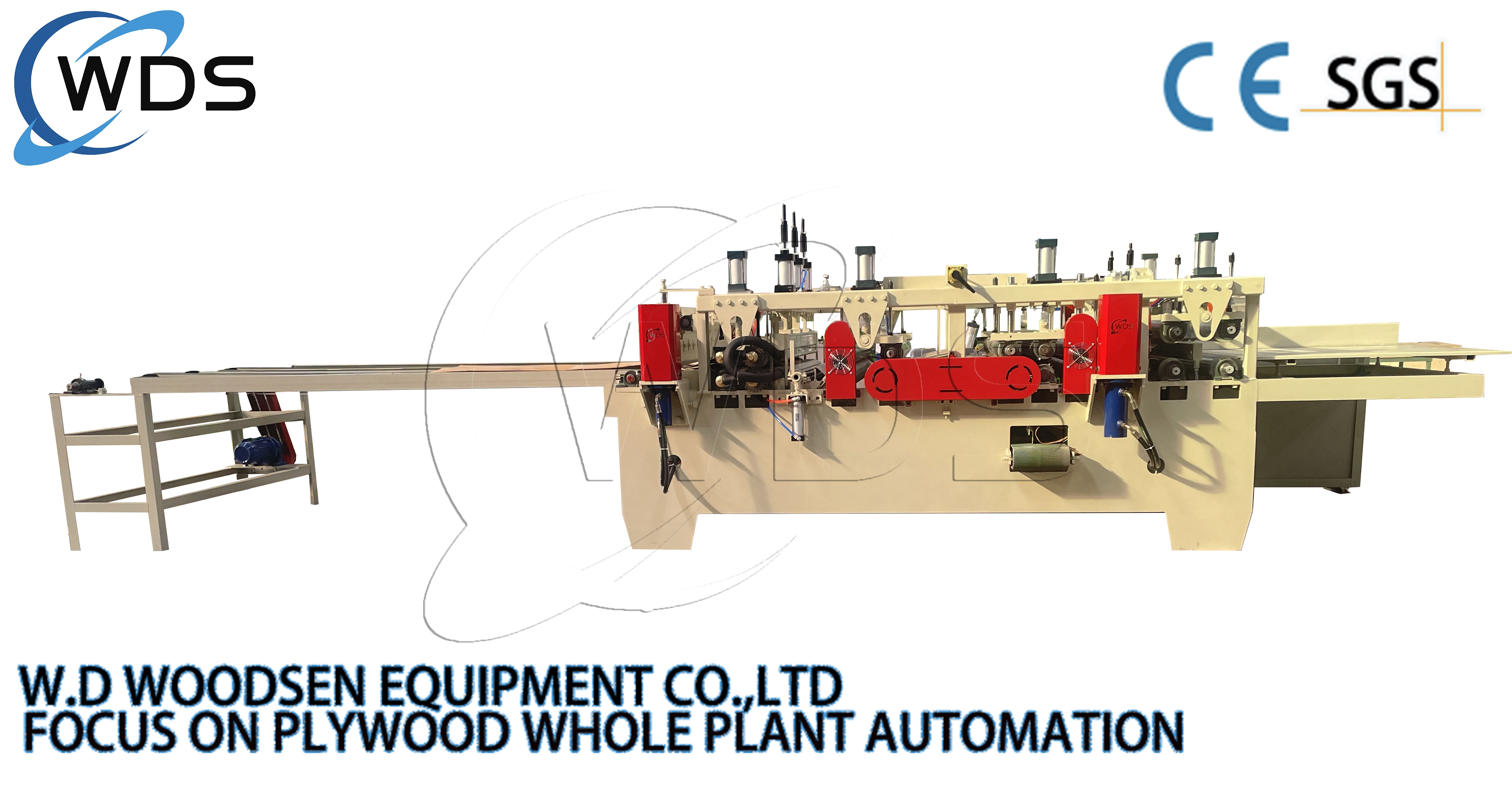
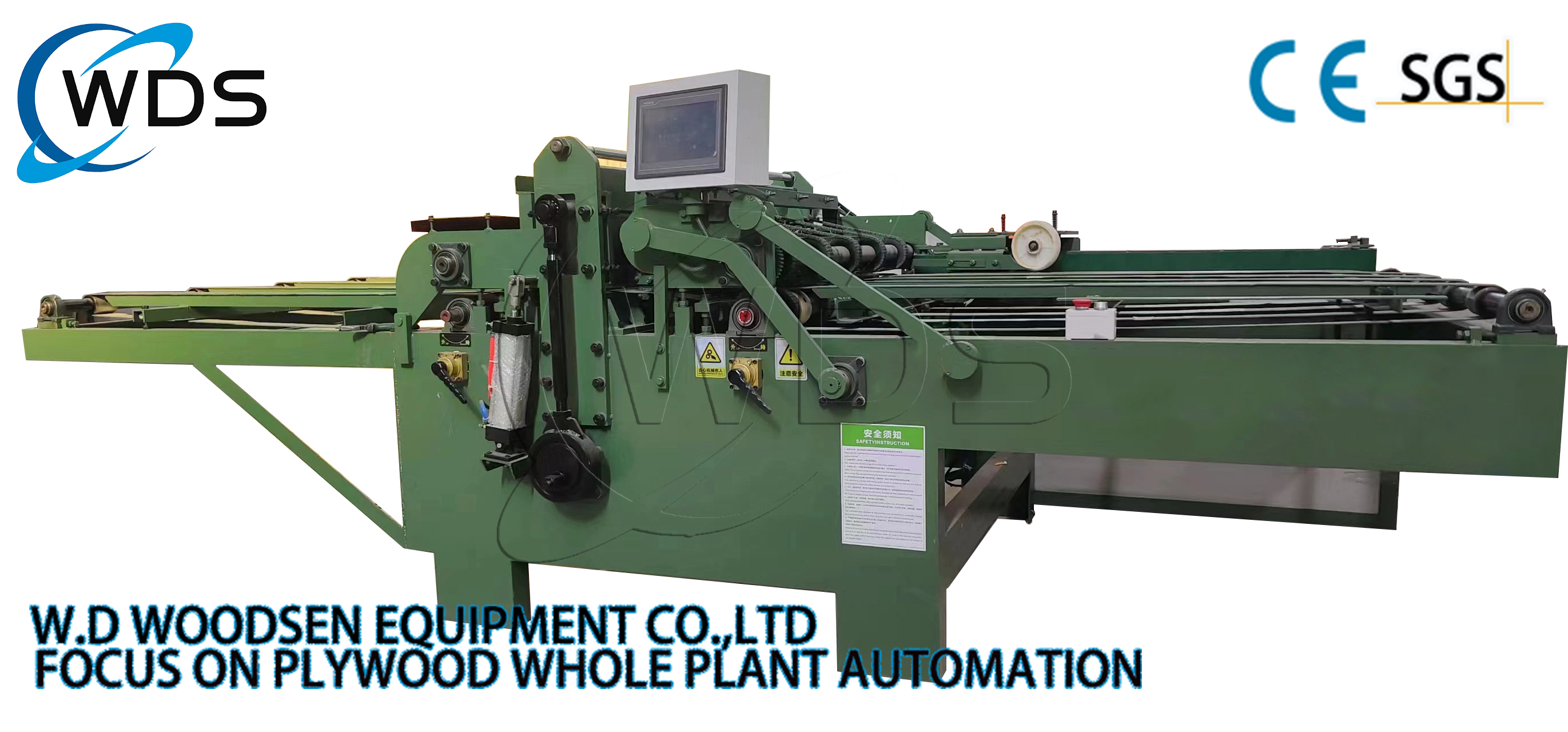
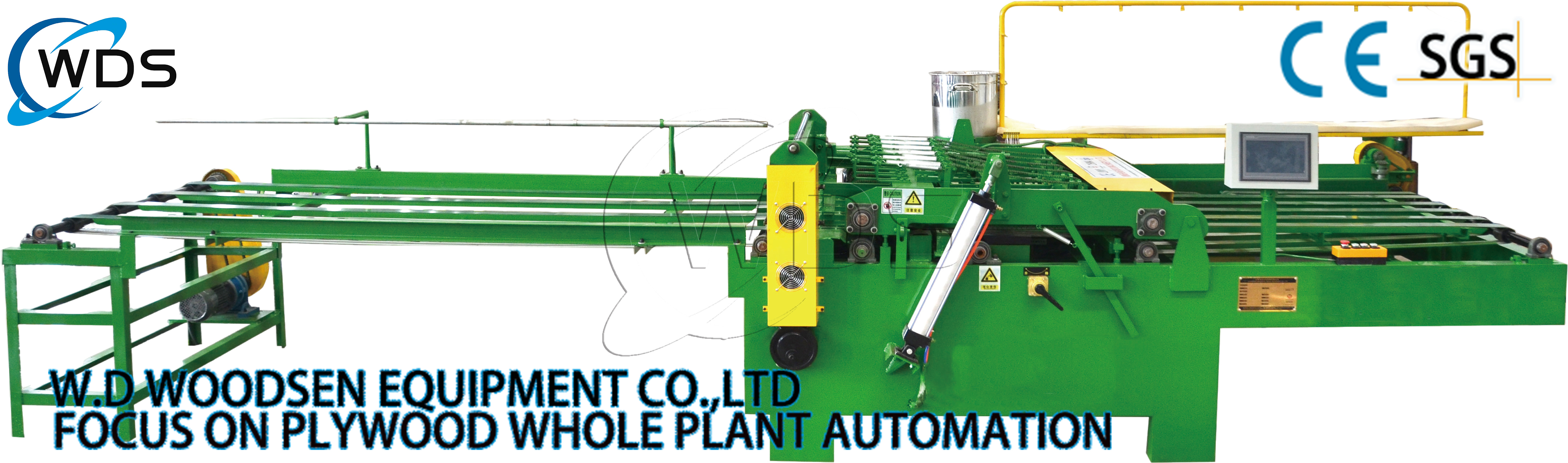


Product Introduction: Finger Joint Machine
The Finger Joint Machine is a core equipment in plywood production, designed to longitudinally splice short wood pieces or veneers into continuous panels using interlocking comb-tooth joints. It overcomes limitations of traditional scarf jointing (e.g., uneven seams, low efficiency, high labor dependency) and is widely used in producing plywood, multi-layer boards, blockboards, and formwork.
⚙️ 1. Key Technical Parameters
Processing Capacity:
Thickness range: 1.7–60mm (covers thin veneers to thick lumber)
Length support: Unlimited continuous splicing (compatible with 4×4 ft to 4×8 ft standard sizes; customizable)
Max. width: 500–1100mm (model-dependent)
Efficiency:
Theoretical output: 240–400 sheets/hour (actual ~250 sheets/hour with auxiliary handling)
Operators: 1–2 (vs. 6+ for traditional methods)
Power & Structure:
Power: 15–30kW (380V industrial voltage)
Core components: PLC control system, servo motors, hydraulic/pneumatic pressure system
Joint pressure: 3–10 tons (ensures joint strength > wood itself)
🌟 2. Core Advantages
Quality & Cost Savings:
Seamless joints reduce sanding by 30% and suit high-grade veneer substrates;
Saves ~¥25,000/month in labor (replaces 1 scarf jointer + 4 manual jointers, cuts 5 workers).
Smart & Eco-Friendly:
Automated glue application (precision control) + mobile cooling reduces glue waste by 20%;
Zero dust pollution (vs. scarf jointing), CE-certified.
Flexibility:
Supports "single-sheet" and "continuous" modes; compatible with hot-melt adhesives (fast-curing glue pellets recommended, cost ~¥0.04/sheet);
Modular design for integration with glue spreaders, hot presses, and drying lines.

